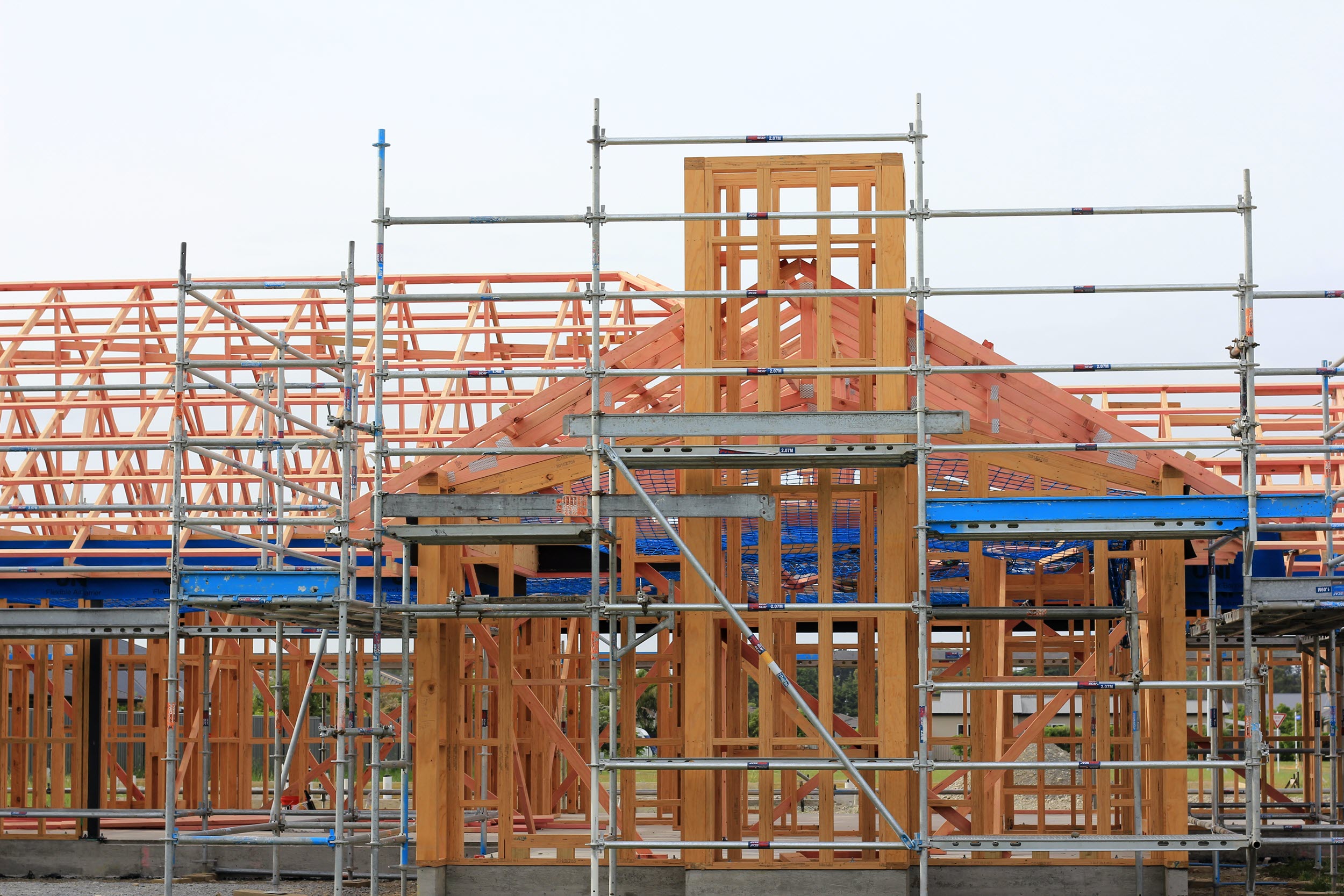
Decarbonize New Buildings
GHG-05
Measure
Efforts for the measure or action have begun but not all work has been completed.
To reduce emissions in new buildings and support more energy efficient homes and businesses, the County will adopt a reach code that includes specific performance standards for energy efficiency and GHG emissions that would be applicable to all new buildings deemed eligible for these requirements. The aim is to reduce reliance on natural gas and other fossil fuels. The County also will provide incentives to encourage developers to meet or exceed the reach code requirements and provide training opportunities to construction workers for the successful implementation of this measure.
The County notes that at the time of development of this CAP, the California 2025 Building Energy Efficiency Standards are in development. As such, the County will monitor the standards included in the 2025 code to determine whether the adopted standards will, at minimum, achieve the GHG reduction and efficiency standards outlined by GHG-05.
Actions
Action GHG-05-a
Work with the California Energy Codes and Standards Program to develop cost-effective reach codes that must be met by all new construction. The reach codes will include the following performance standards:
- Residential single-family: Projects must meet or exceed a modeled EDR1 (hourly source energy) metric of 11.5 points above the 2022 Title 24, Part 6 statewide performance minimum (the “standard design building”).
- Residential multifamily: Projects must meet or exceed a modeled Energy Source Margin of 11 percent above the 2022 Title 24, Part 6 statewide performance minimum.
- Nonresidential: Projects must reduce non-electricity-related GHG emissions by 85 percent below 2022 Title 24, Part 6 equivalent emissions for each nonresidential buildings type.
Action GHG-05-b
Provide fee reductions or offsets and expedited permitting for residential and nonresidential projects that are built all-electric and do not include new natural gas infrastructure piping.
Action GHG-05-c
Conduct stakeholder outreach with building industry members, contractors, residents, businesses, and other interest groups to present the reach code options and solicit feedback.
Action GHG-05-d
Develop and adopt an ordinance(s) to implement new construction building reach code(s) based on the cost-effectiveness studies (completed as part of Action GHG-05-a) and stakeholder outreach (completed as part of Action GHG-05-c).
Action GHG-05-e
Submit the ordinance(s) and cost-effectiveness studies for new construction building reach code(s) to the California Energy Commission for review and approval.
Action GHG-05-f
Conduct training for County permitting staff to understand the reach code requirements for new buildings and how compliance will be demonstrated.
Action GHG-05-g
Engage with the California Energy Codes and Standards Program to continually monitor and reassess legal and regulatory barriers requiring all-electric new construction and develop pathways for eliminating the expansion of natural gas infrastructure in the county as feasible.
Action GHG-05-h
Develop a tracking system for the number of housing units and nonresidential square footage that is built to comply with the new reach code.
Action GHG-05-i
Provide information regarding new reach code requirements and any incentives to contractors, potential owners, and building applicants by publishing information on the County website, developer/business group-focused communications, and at the permit counter. This should also include information on grant funding opportunities, such as the Building Initiative for Low-Emissions Development (BUILD) Program, and 179D tax credits.
Action GHG-05-j
Develop a tracking system for the number of housing units and nonresidential square footage that is built to comply with the new reach code.
Status of Implementation
The County has established an internal working group to begin the process of establishing a reach code for new single-family and low-rise residential units. The goal is to have adoption concurrent with the County’s adoption of the State’s 2025 triennial code package to be effective January 1, 2026. The County is monitoring AB-306 (Schultz) which would, if approved, block any jurisdiction in California from adopting new reach codes between June 1, 2025, and June 1, 2031.
Updated 3/28/25
Objectives
Residential buildings to meet or exceed a modeled EDR1 (hourly source energy) metric of 11.5 points (single-family) or Energy Source Margin of 11 percent (multifamily) above the Title 24, Part 6 statewide performance minimum, including:
- 19,500 new residential units built by 2030, and
- 78,200 new residential units built by 2045.
Nonresidential buildings:
- Adopt and enforce a reach code such that new construction reduces non-electricity-related emissions by 85% below 2022 Title 24, Part 6 equivalent emissions for each nonresidential buildings type.