Carbon Farming Techniques
Carbon farming (AKA Regenerative Agriculture) is a menu of agricultural practices selected to complement and enhance the land's ability to sequester carbon. There are many methods available and they are selected based on land and soil types as well as individual operational goals and needs. In addition to sequestering carbon dioxide, these techniques provide regenerative benefits that can strengthen soil health, reduce operating costs, and increase productivity.
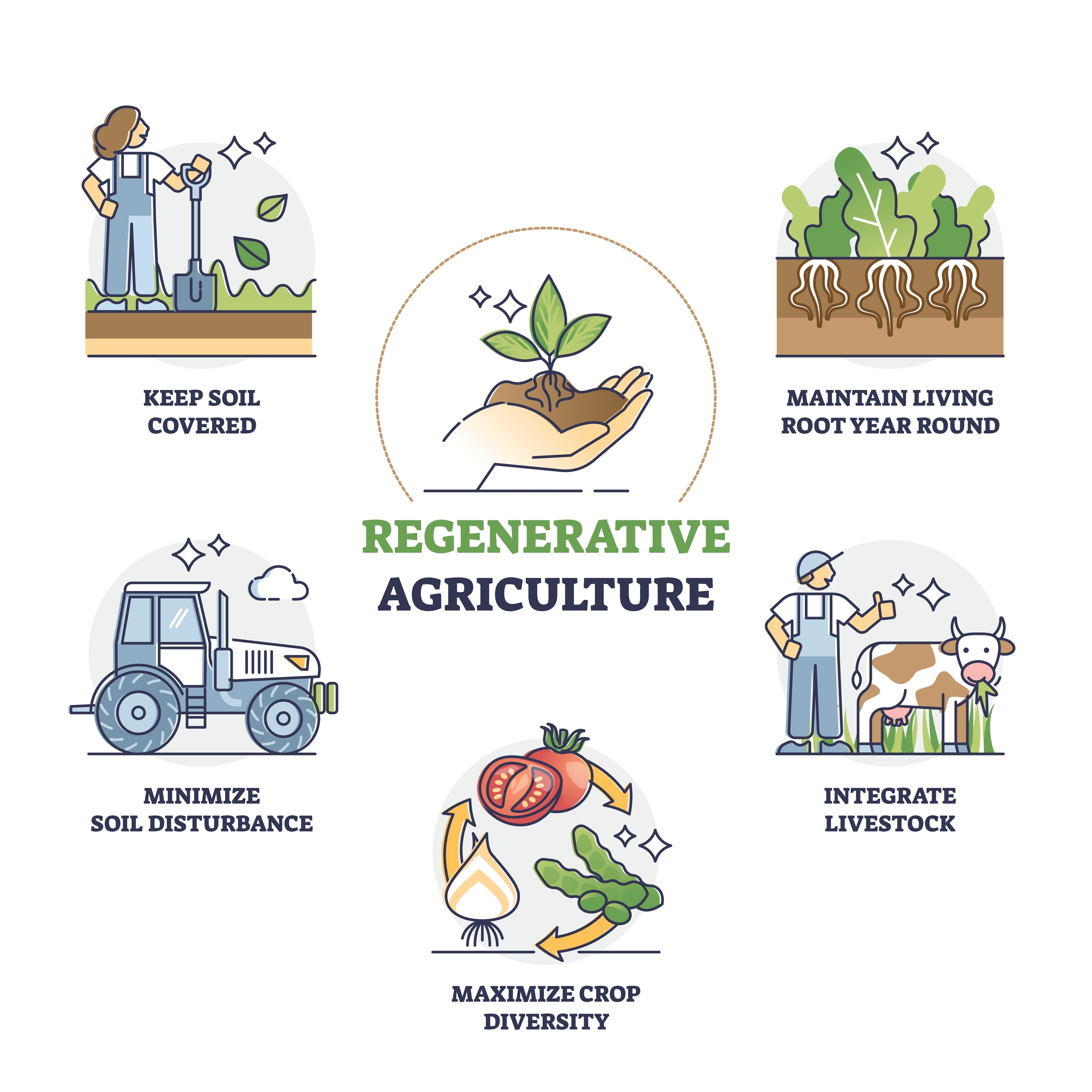
The Natural Resources Conservation Service recognizes many different conservation techniques as regenerative agriculture practices that boost carbon sequestration into the soil. The following sections highlight some of the most applicable and effective methods for the Sacramento region and provide access to additional sources to learn more.
The following sections highlight some of the most applicable and effective methods for the Sacramento region and provide access to additional sources to learn more.
- Mulching
- Hedgerows
- Forage/Biomass Planting
- Nutrient Management
- Prescribed Burning
- Prescribed Grazing
- Range Planting
- Reduced-Till/No-Till Operations
- Riparian Forest Buffer & Herbaceous Cover
- Silvopasture
- Alley Cropping
- Soil Carbon Amendments (Compost)
- Cover Crops
- Critical Area Planting
- Crop Rotation
- Windbreak-Shelterbelt